02.09.2026
Event Technical Production: How It Works in Practice
Technical production is what decides whether an event runs smoothly. Rigging, sound, lighting, power and get-in logistics all have to work together — on time and on budget.
For 18 years we've worked on event productions across Poland, Europe, the USA and the Middle East. From concerts and esports events to trade shows and corporate events. We'll take you behind the scenes: what event technical production actually involves, who's on the crew and the principles we work by day to day.
What event technical production involves
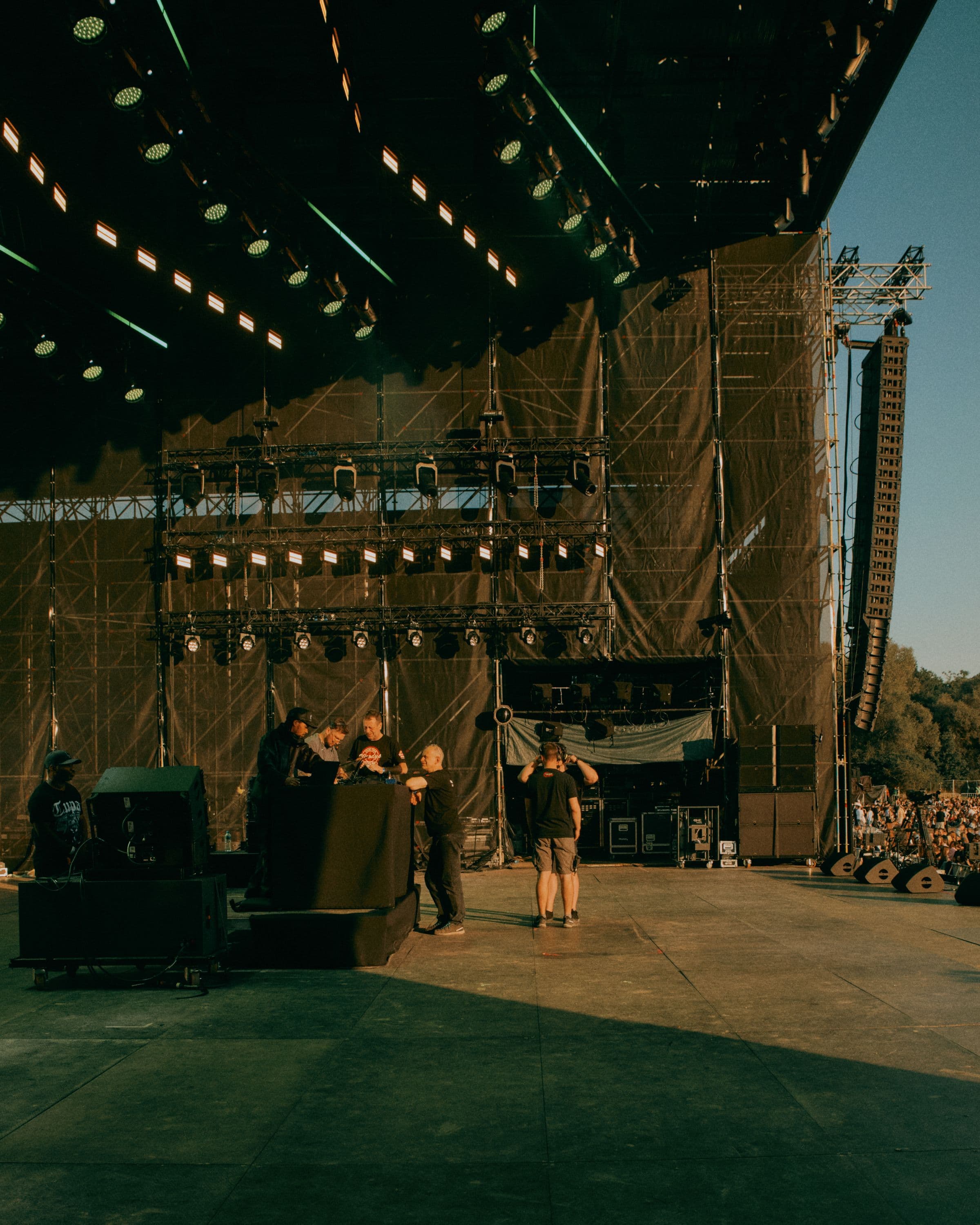
Technical production covers everything that builds the show on site. It starts the moment the crew rolls in and ends with the get-out, when the last truck pulls away.
We bring the equipment, the people and the schedule into one coherent process, and we own it from the first day of the get-in to the last day of the get-out.
• Rigging and stage structures – anchor points, load ratings and structural certification are the safety foundation of any production with flown equipment.
• Scenery and staging – we build and install set pieces and custom carpentry to the creative design.
• Sound and lighting – matching them to the venue and the type of event shapes the audience's experience more than any other technical element.
• Power – we plan capacity, distribution and backup generators with headroom, so the system holds up under full load.
• Video and LED – screens, live streaming and visual systems have to be coordinated with every other department, so picture, sound and light work as one.
• Get-in and get-out logistics – a tight schedule and smooth coordination across departments let us get every detail right before the doors open.
Who's on the technical crew
Behind smooth technical production are people with specific, hands-on skills. We build our own crew and train them ourselves, which keeps everything consistent at every stage of the production and holds our service to the highest standard.
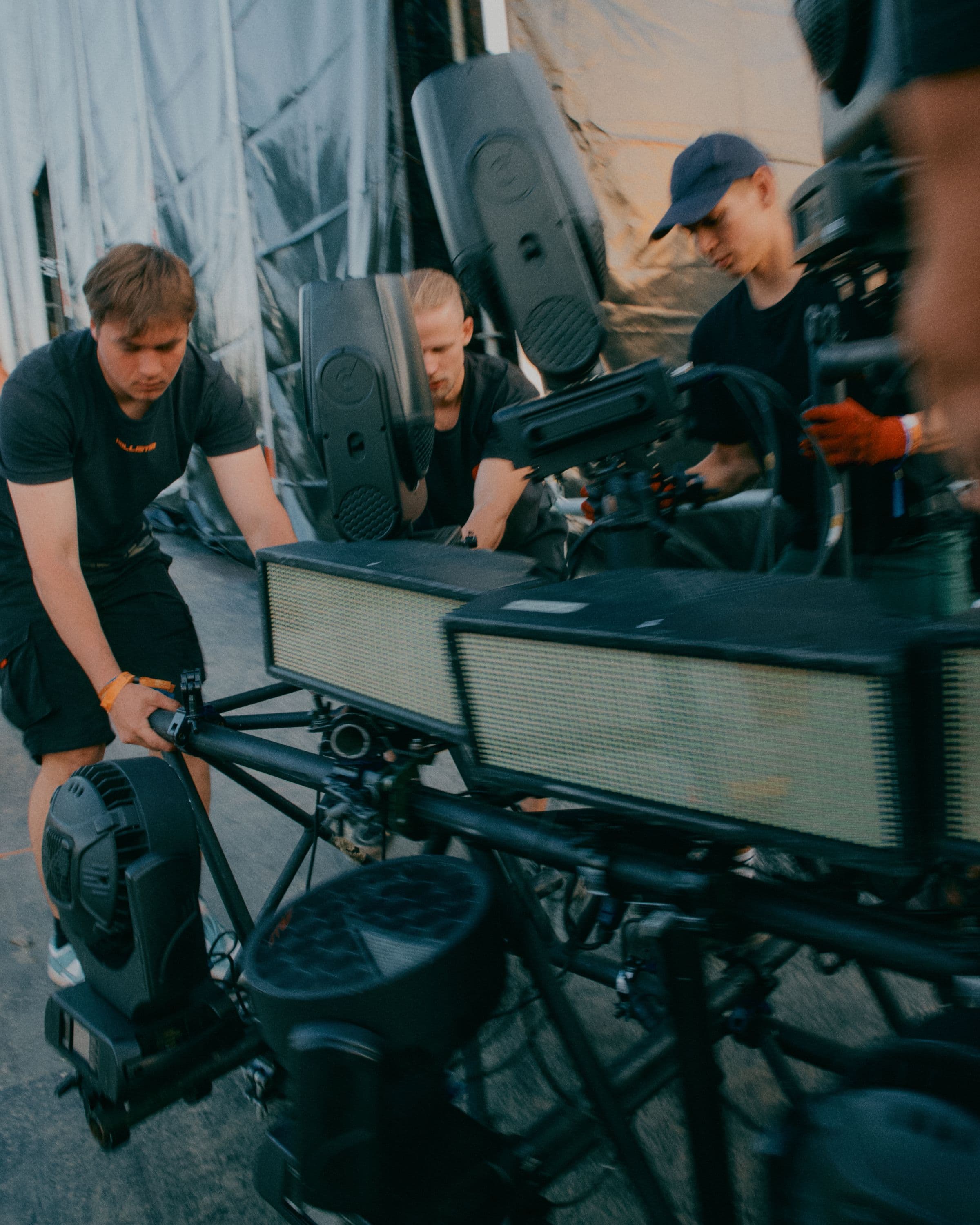
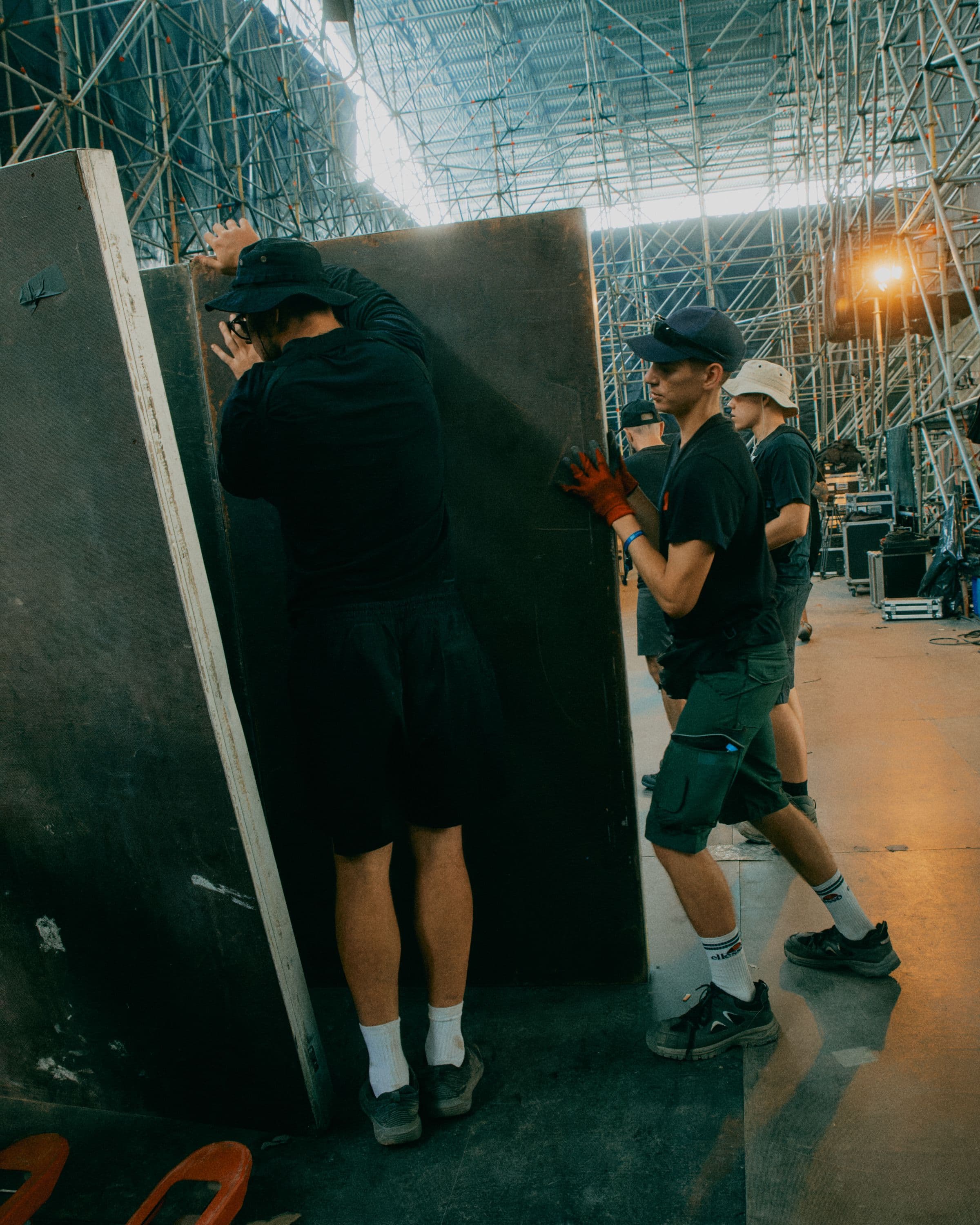
Every new crew member starts as a stagehand, the most basic role on the team. It's physical work that doesn't call for specialist experience: moving equipment, prepping the space, building and striking the stage, decks, ramps and barriers, and supporting the artists and the rest of the crew backstage. Over time a stagehand builds experience and moves up.
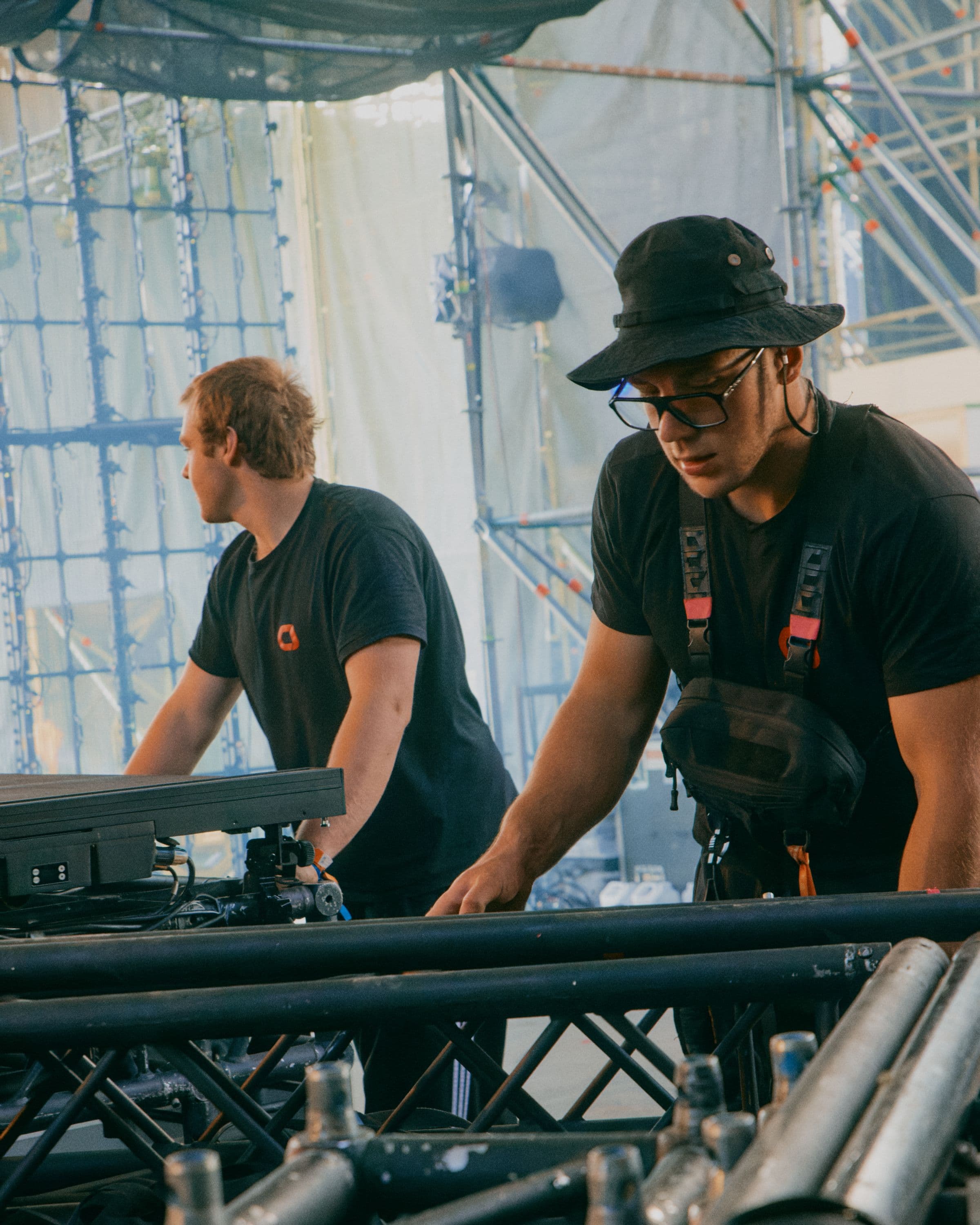
The technical side is run by technicians. A junior technician supports the get-in, get-out and day-to-day running of the production; a technician handles more advanced technical set-ups; and a scenic technician installs the set pieces to the creative design.
Structures on site are built by three separate specialists. A carpenter handles the build and assembly of structures and joinery. A scaffolder erects and dismantles stage scaffolding and works at height. A rigger installs flown structures and manages the loads to safety standards.
Logistics and transport are handled by a separate group. A licensed forklift operator moves equipment and materials. A category B driver takes care of getting the crew and kit there safely and on time. A runner is an experienced driver and buyer for the production and the crew — the person who sorts out whatever's missing on site.
Overseeing it all is the crew chief, who coordinates the work on site.
The events we work on
Our crew supports festivals, concerts, esports events and trade shows across Poland, Europe, the USA and the Middle East.
Festivals we've worked on include Open'er, Orange Warsaw, FEST Festival, BitterSweet Festival, Hurricane Festival and Southside Festival.
We've helped build the touring productions of artists like Beyoncé, Harry Styles, P!nk, Imagine Dragons, Bad Bunny, Lenny Kravitz, Rammstein, Taylor Swift, Metallica and Dawid Podsiadło.
Esports events we've worked on include IEM Katowice, IEM Cologne, IEM Dallas, ESL One Raleigh, DreamHack Summer and Winter, The International and many more.
Trade shows we've delivered include EXPO 2025 Osaka, Impact'24, IAA, IAAPA, SLB Monaco and WTA London.
Our values and how we work
In technical production we work by a few core principles. They've taken shape over 18 years on productions. Today they're the foundation of everything we do.
• Reliability – we show up whatever the circumstances, and we stay to the very end. Reachable 24/7, with response times measured in hours, not days.
• Trust – we keep our word. The whole events industry runs on relationships, so we take them seriously and follow through on what we promise.
• Flexibility – plans change on site every day. We always look for a solution, not an excuse.
• Quality – it's built from the small things: holding the same standard every day, even when no one's watching.
• Accountability – everyone on the team knows what they're responsible for and owns their part of the project.
Technical safety on site
We hold to one safety standard, whatever the size of the event. Certified structures, equipment checks before every job, and a clear split of responsibilities across the crew are the basis of how we work.
Sign-offs, inspection records and checklists live in the project documentation, available to the whole crew at every stage.
What event technical production costs
The cost of technical production depends on the scale of the production, the location, the crew size and the build time. A small event in a venue with infrastructure already in place needs a very different budget from an outdoor production built from scratch.
Every quote is built from the brief, which makes that first conversation with the organiser the most important step in the whole process.
FAQ
Which specialists make up the technical crew at an event?
Stagehands and production crew for the physical work, technicians (including junior technicians and scenic technicians), carpenters, licensed forklift operators, scaffolders and riggers on the structures, drivers and runners in logistics, and a crew chief coordinating the whole team on site. The line-up depends on the scale and type of production.
How many people does it take to run technical production for a medium-sized event?
It depends on the scale. For events with a few thousand attendees, the technical crew is usually anywhere from a dozen to several dozen people, plus a 10% buffer for the unexpected.
How long does the technical get-in take before an event?
For indoor productions the get-in usually takes one to two days. Large outdoor productions can need several days for the build and testing.
Technical production that works before you notice a problem
Good technical production is invisible to the audience — even when the crew is fixing a power failure an hour before the doors open.
We've worked on hundreds of productions in Poland, from small corporate events to major concerts and esports tournaments. Before you finalise your get-in schedule, talk to us.
Get in touch →