13.08.2026
5 mistakes technical crews make at events — and how to avoid them
On a big production, several teams work at once — sometimes a dozen. Staging, audio, lighting, rigging, video. Each has its own kit, its own schedule and its own moment to move in. One link falls out of rhythm and the delay sets off a domino effect that catches everyone in turn.
That's why a smooth show comes down to coordination, not just equipment: who does what, when and with whom.
Here are five mistakes that keep coming up on event productions — and how we prevent them.
1. Kit in the wrong place, at the wrong time
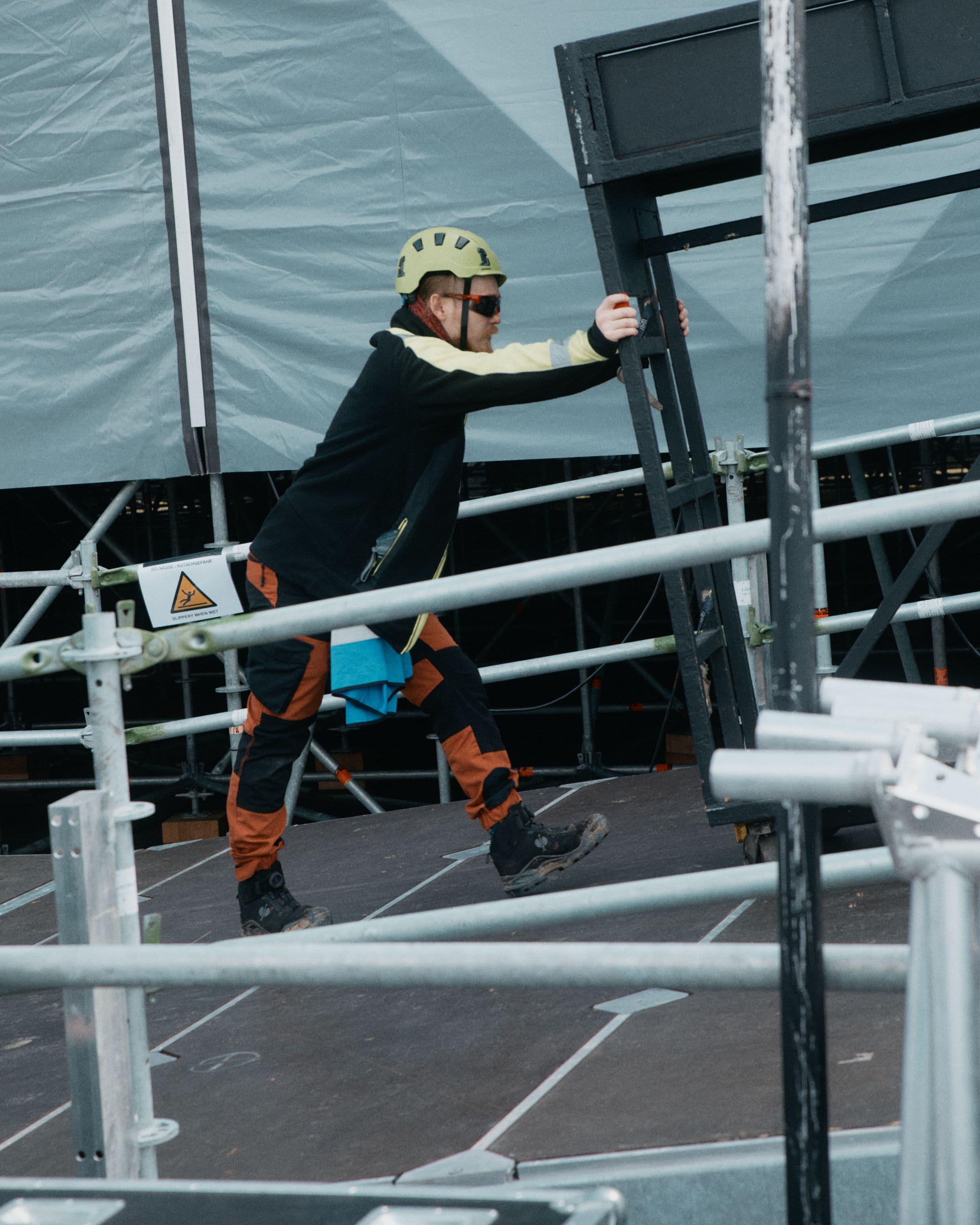
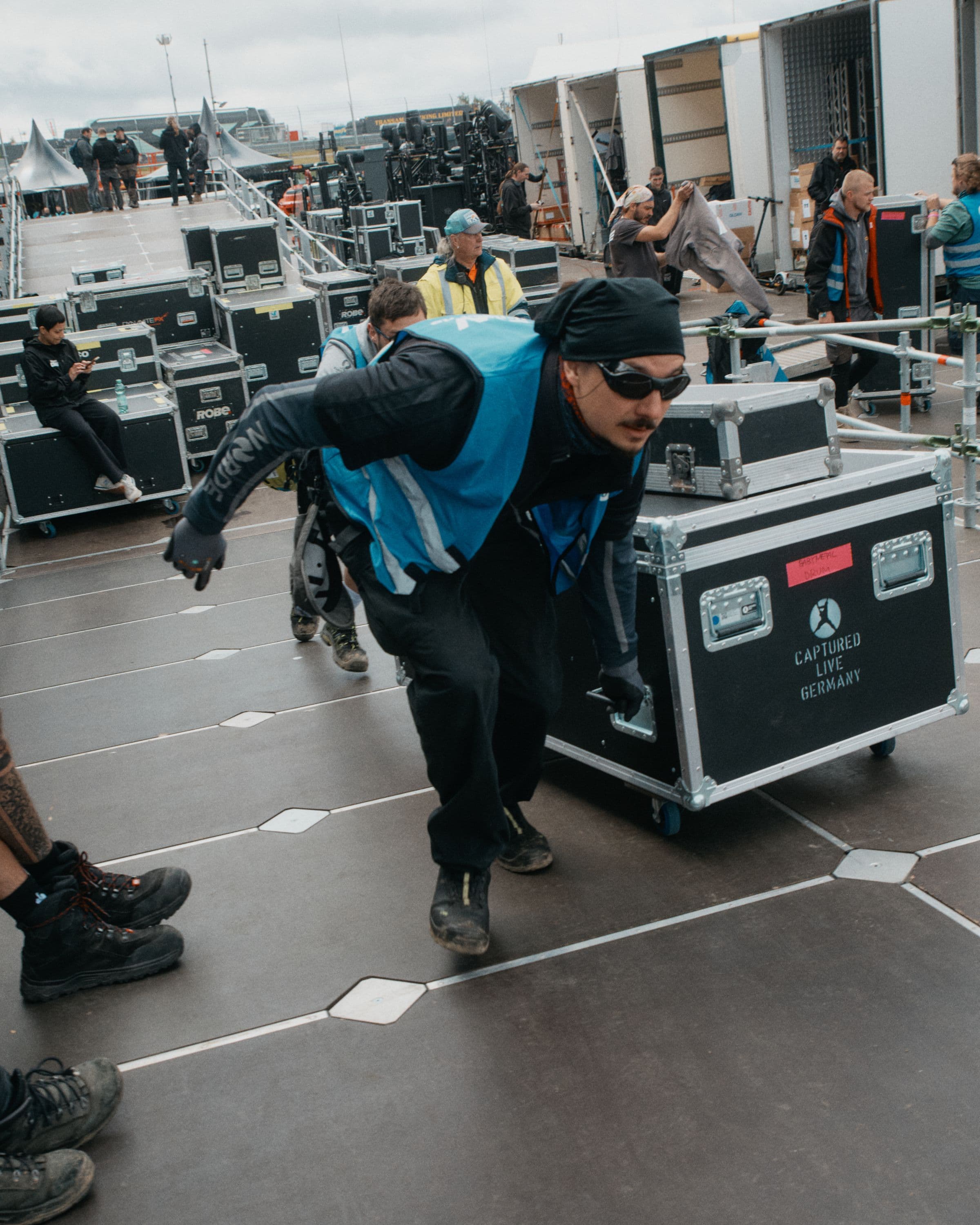
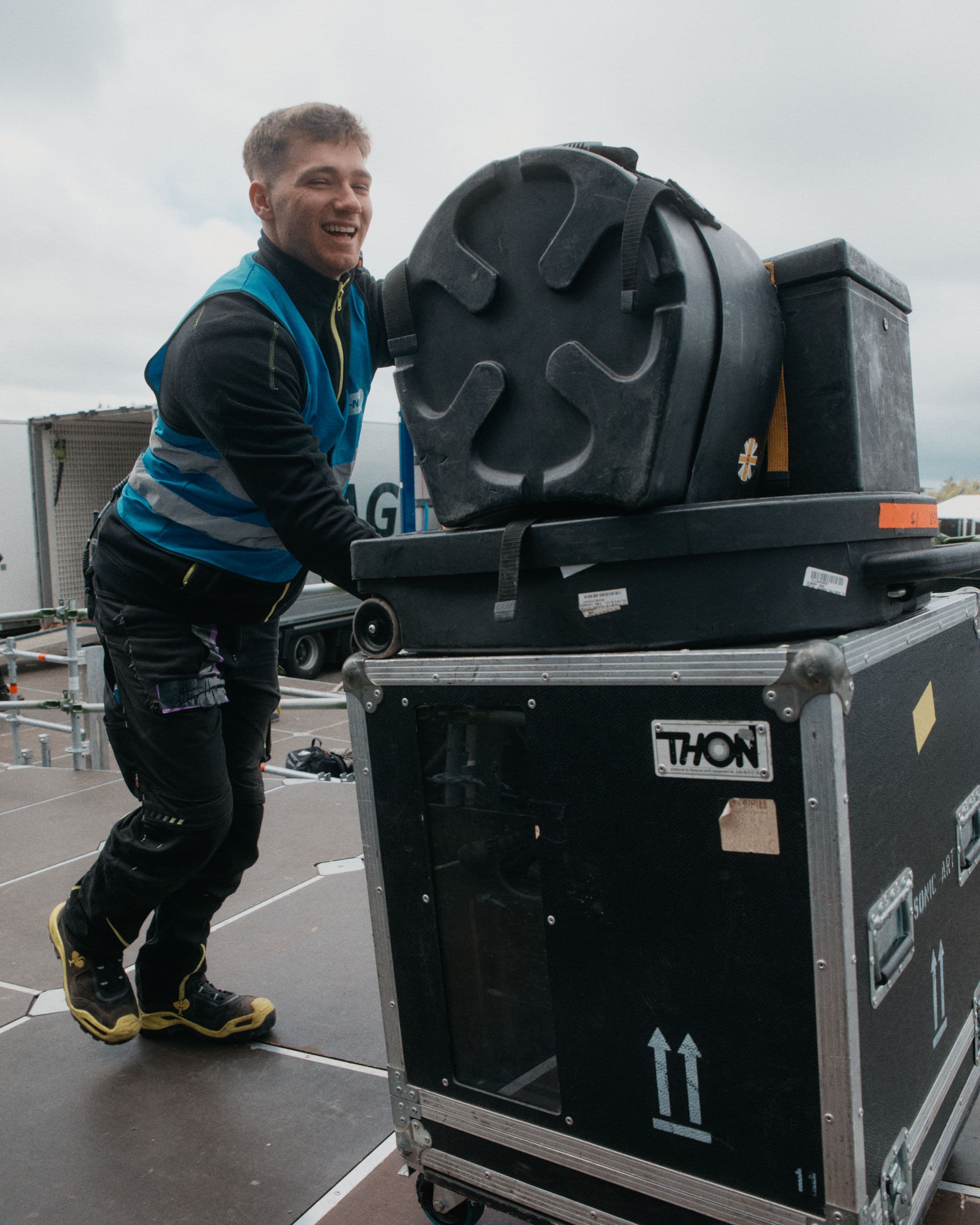
The build won't start because something's missing or a case has ended up on the far side of the hall. During load-in, small things like this cost the most: every minute spent searching is a minute less for rehearsal.
How to prevent it: an equipment list and checklists prepared before you even leave, a clear split of who carries what and where it goes, and a crew chief keeping an eye on it on site. People who know the venue set up faster, because they know where the gates, lifts and cable runs are.
2. Accidents waiting to happen because of unclear communication
A badly secured fitting or a vague instruction isn't a "glitch" — it's a real hazard. Most mishaps don't come from a lack of skill, but from someone not hearing or not knowing something.
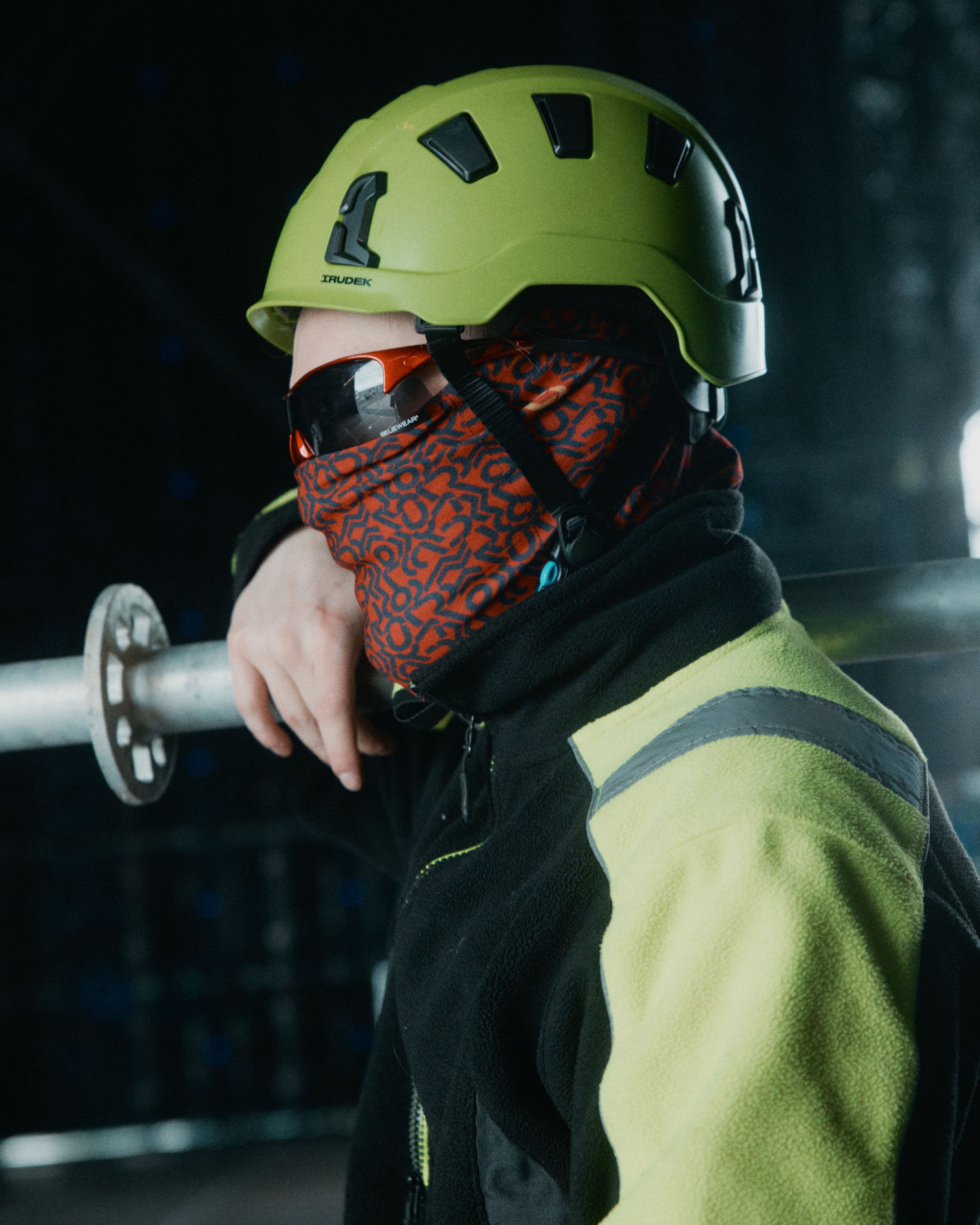
How to prevent it: a safety briefing at the start, constant communication throughout load-in and load-out, clear task allocation and sticking to each venue's rules. A team that works in sync means fewer accidents — and safety for the crew and the audience alike.
3. Schedule overruns because teams don't work together
When each team works in isolation, the jobs start clashing: some wait on others, the running order falls apart and the build drags on.
How to prevent it: one shared schedule that says which team goes in and when, plus live communication so you can react when something changes. And it always changes.
4. The failure you could have caught earlier
Audio, lighting or video can drop out mid-event — usually because the gear wasn't properly tested beforehand.
How to prevent it: technical run-throughs before the event, checking each system in turn (audio, lighting, video) against the production plan, and experienced technicians on hand who don't just rig the kit but can fix it on the fly, before the audience notices.
5. Backstage chaos during the show
Someone walks on at the wrong moment, a piece of gear rolls out too early, the artist is left waiting. The audience feels it instantly. Live, there's no second take.
How to prevent it: a mapped-out backstage plan aligned with every team, clear cues, and a stage manager who controls all movement in the wings.
How we do it
For us, coordination is the foundation of technical production. Every job has a crew chief who knows the plan and coordinates the team on site. We also bring an extra 10% of crew in reserve, because something can always fall through on a production, and the event won't wait. Add to that a pre-build briefing, a clear split of duties and people we train ourselves: stagehands, riggers, technicians and crew chiefs. The result is simple — fewer fires, and the ones that do break out, we put out before anyone smells smoke.
Planning an event and need a team to handle the full technical side?
Get in touch — we'll take care of the production, so you can take care of the event.